

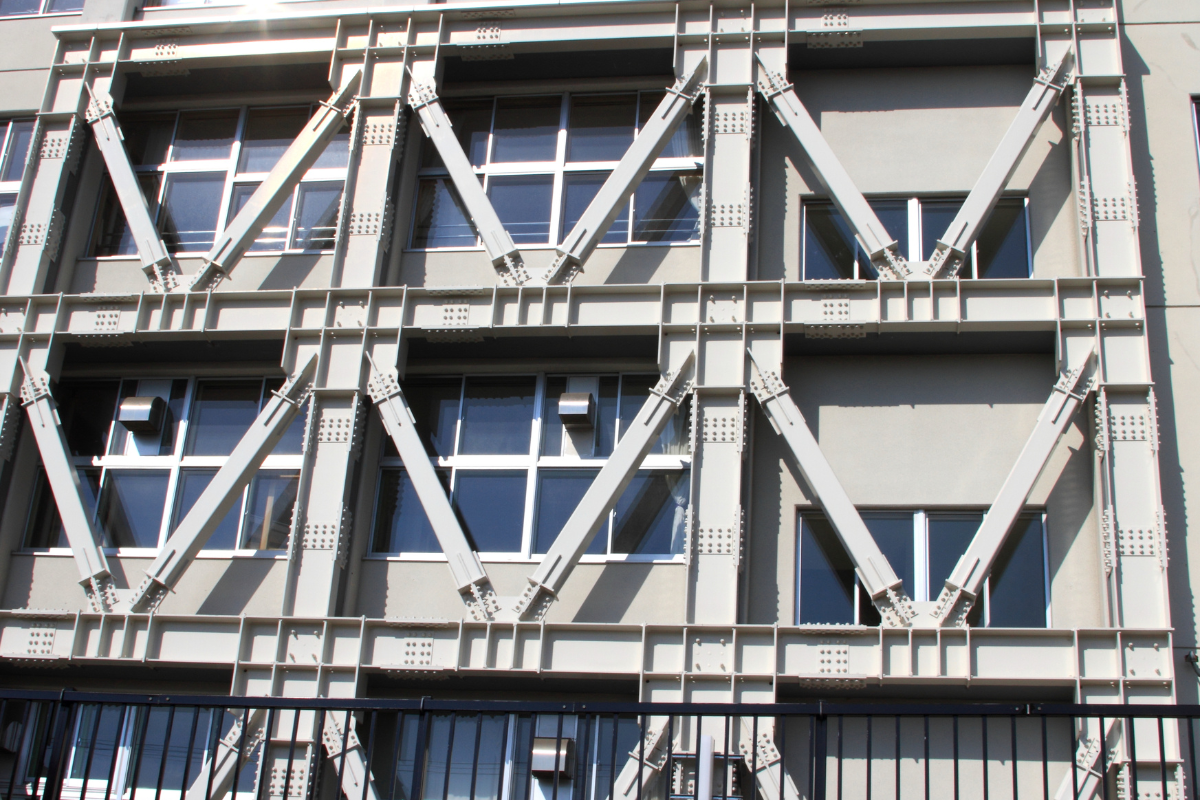
For commercial property owners in San Francisco, earthquake preparedness is a practical business concern. A major seismic event can affect more than the physical structure of a building. It can interrupt daily operations, displace tenants, delay reopening, and create costly repair work at a time when resources are already stretched. The Bay Area remains a high-risk earthquake region, with a long-term USGS forecast indicating a 72% chance of a magnitude 6.7 or larger earthquake within a 30-year period.
In this blog, we explain what seismic retrofitting means, when a commercial building may need closer evaluation, and what owners should consider before planning the work.
What Is a Seismic Retrofit?
A seismic retrofit is a set of structural improvements made to an existing building so it can respond more effectively to earthquake forces. The goal is not to make a building completely earthquake-proof. Instead, retrofit work is designed to reduce known vulnerabilities and improve how the structure performs during strong ground movement.
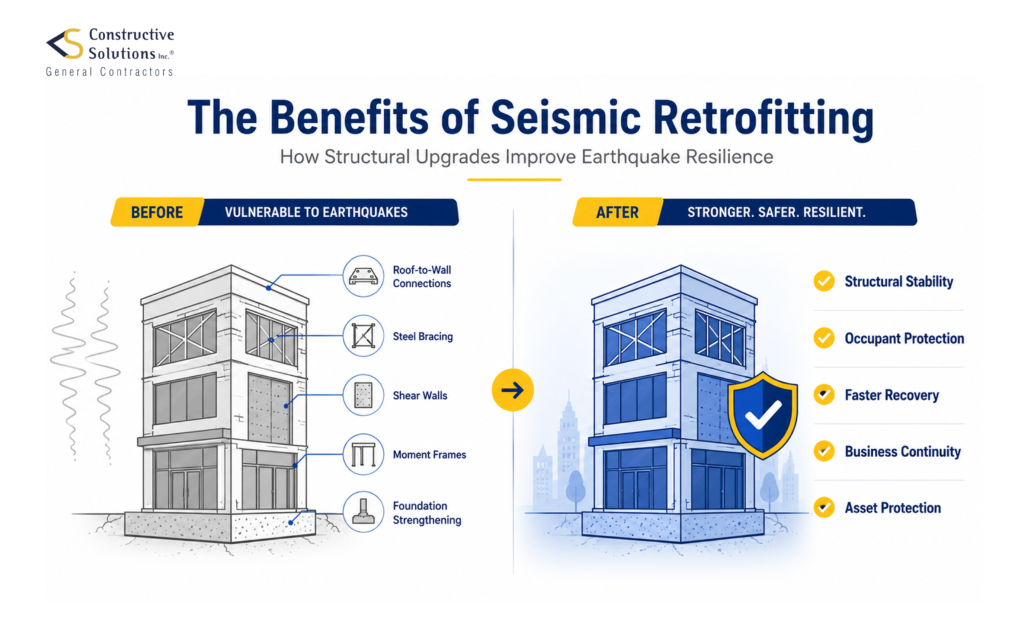
What a Retrofit May Improve
A retrofit plan is developed around the condition, age, and structural system of the building. Depending on the property, the retrofitting work may help improve:
- Overall structural stability: Strengthening areas that may be more likely to shift, crack, or fail during an earthquake.
- Resistance to side-to-side movement: Helping the building manage lateral forces created by ground shaking.
- Connections between major building elements: Reinforcing how walls, floors, roofs, and foundations work together rather than move independently.
- Occupant protection: Reducing the risk of structural failure and creating a safer environment for tenants, employees, and visitors.
- Post-earthquake recovery: Limiting damage that could prevent the property from reopening promptly.
- Business continuity: Reducing the chance that a single event causes an extended shutdown, tenant disruption, or a major loss of revenue.
Seismic Retrofit vs. Seismic Assessment
A seismic assessment and a seismic retrofit are related, but they are not the same thing. An assessment is the evaluation stage. A qualified structural engineer reviews the building, identifies potential weaknesses, and determines whether further investigation or improvements are appropriate. A retrofit is the construction work that follows when those weaknesses need to be addressed.
Why San Francisco Commercial Property Owners Should Consider a Seismic Evaluation
San Francisco’s Ongoing Earthquake Risk
The Bay Area remains one of the most seismically active regions in the United States, making earthquake preparedness an ongoing consideration for commercial property owners. While predicting a major earthquake is impossible, the way a building performs during one can significantly affect business operations.
For commercial properties, the consequences often extend beyond structural repairs. A damaged building may face temporary closure, tenant displacement, interrupted revenue streams, and costly emergency work. Property owners may also encounter challenges related to insurance claims, financing, leasing activity, and long-term asset value. In busy commercial districts such as Downtown San Francisco or SoMa, even a short disruption can create operational and financial challenges.
Increased Attention on Potentially Vulnerable Concrete Buildings
San Francisco has expanded its efforts to better understand how older buildings may perform during a major earthquake. In 2025, the SF City launched the Concrete Building Screening Program, which focuses on older concrete and tilt-up structures that could be more susceptible to seismic damage.
As part of the initiative, the City identified nearly 4,000 buildings for further review, many of them located in Downtown San Francisco, SoMa, and other commercial districts. However, receiving a screening notice does not mean a building is unsafe or that retrofit work is immediately required. The goal is to gather more accurate information about potentially vulnerable structures and determine which properties may benefit from a professional seismic evaluation.
Many structures that appear solid from the outside may perform very differently during an earthquake because of their internal weaknesses.
Why an Early Seismic Evaluation Makes Sense
For many commercial owners, the biggest advantage of a seismic evaluation is having time to plan. A professional assessment can identify potential structural vulnerabilities before they become costly repairs or compliance issues.
By assessing a building early, owners can:
- Understand the building’s actual structural condition
- Prioritize upgrades based on risk and budget
- Coordinate potential work around tenant schedules and daily operations
- Compare retrofit options before committing to a solution
- Avoid rushed decisions if new seismic requirements are introduced
- Plan future building improvements and budgets more effectively
Most importantly, an early assessment provides information. Rather than relying on assumptions about a building’s age or appearance, owners can make decisions based on engineering findings and the specific needs of their property.
Which Commercial Buildings May Need a Seismic Evaluation?
Only a qualified structural engineer and a contractor can determine whether a specific property requires seismic retrofit work. However, certain building types in San Francisco are more commonly evaluated because of how they were designed, the materials used during construction, or the way they respond to earthquake forces.
Below are some of the building profiles that may need a seismic evaluation.
Non-Ductile Concrete Buildings
Non-ductile concrete buildings are among the most discussed structures in San Francisco’s Concrete Building Screening Program, which aims to collect information on their vulnerabilities. Some older reinforced-concrete buildings were built before modern seismic detailing became standard and may not contain the level of steel reinforcement we expect today. Their columns, beams or connections may not bend and absorb earthquake forces as well as newer systems.
This does not mean that every concrete building is unsafe. It means the structural system deserves a professional evaluation to understand actual performance risks.
Tilt-up and Rigid-Wall Flexible-Diaphragm Buildings
These are often low-rise warehouses, retail buildings or industrial properties with heavy perimeter walls and a lighter roof system. Many of these structures use concrete wall panels connected to a roof diaphragm system that must transfer earthquake forces throughout the building.
Older roof-to-wall connections, anchors or diaphragm components may need review as they experience significant stress during strong shaking. San Francisco’s screening program also includes this building type because of its known seismic vulnerabilities.
Soft-Story Commercial or Mixed-Use Buildings
A soft-story building is one where the ground floor has large openings that reduce structural stiffness compared with the floors above. Examples of soft story conditions include storefront windows, wide entrances, parking areas or open commercial space at ground level.
These open layouts are much less able to withstand the lateral forces and can create weak points during earthquake movement. Other commercial and mixed-use buildings can also benefit from an engineer’s evaluation when the ground floor has large openings, ensuring long-term building resilience and occupant safety.
San Francisco’s mandatory soft-story retrofit ordinance requires the soft or weak first stories of both residential and commercial buildings to be retrofitted to improve their seismic resistance.
Unreinforced Masonry Buildings
Unreinforced masonry buildings often rely on older brick walls without adequate steel reinforcement. The walls, parapets and connections between the walls, floors and roof may be vulnerable during an earthquake, hence, may require a seismic assessment.
Many San Francisco masonry buildings have already undergone retrofit work through previous seismic programs. Even so, owners should review available records and confirm whether upgrades were completed, documented, and appropriate for the property’s current use.
Historic and Older Commercial Properties
Historic buildings and older commercial spaces may have several issues at once: outdated structural details, undocumented remodeling, aging materials or sensitive architectural features. Over the years, modifications may have altered how these buildings respond to earthquake forces.
A professional seismic evaluation can identify potential weaknesses and determine retrofit solutions while considering the building’s historic preservation and operational needs.
Step-by-Step Commercial Seismic Retrofit Process in San Francisco
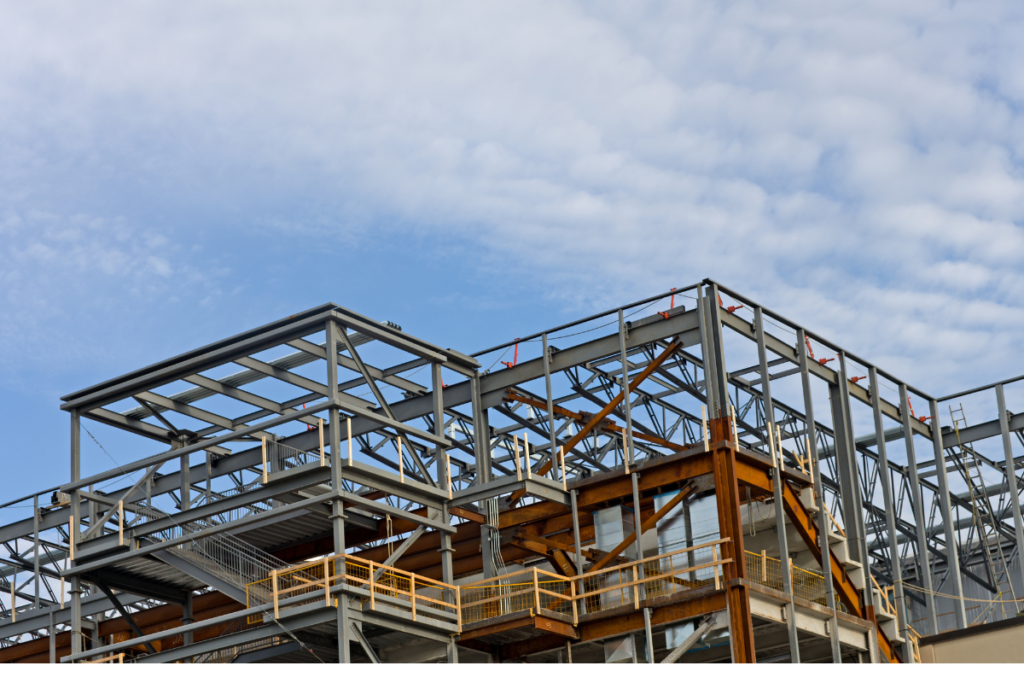
Every seismic retrofit project is different, but most commercial properties follow a similar process from initial evaluation through construction and final approval.
Step 1 — Review Existing Building Records
The seismic retrofitting process typically begins with gathering as much information as possible about the property. Reviewing original drawings (if available), permit history, previous structural upgrades, construction type, building age, and records of tenant improvements can give valuable insight into how the building was designed and modified over time.
Moreover, records help engineers and contractors spot hidden concerns before design work begins.
Step 2 — Schedule a Seismic Assessment
A structural engineer should inspect the commercial property and identify the building’s lateral-force-resisting system: the parts that help it withstand side-to-side earthquake movement. The risk assessment may include a site walk, record review, measurements and targeted investigation of walls, columns, beams, diaphragms, foundations and connections. The engineer may also flag areas where finishes need to be opened or where destructive testing is appropriate.
Step 3 — Define the Structural Performance Goals
Before design begins, owners should discuss retrofit goals with their engineer and general contractor team. For example, one property owner may want a seismic retrofit to protect life safety during major earthquakes. Another may want to reduce downtime, protect inventory or improve the chance that tenants can return sooner after an earthquake. Others may want to focus their earthquake retrofitting on simply ensuring code compliance. The structural team can explain what objective is realistic for the commercial building and budget.
Step 4 — Develop the Seismic Retrofit Design
Once risks have been identified and goals set, the design team creates a retrofit strategy based on the building’s structural system and engineering findings. In many cases, the design process may follow industry standards such as ASCE 41, which provides guidance for assessing and improving the seismic performance of existing buildings.
Seismic retrofitting solutions for commercial buildings may include:
- Steel bracing systems
- Buckling-restrained braced frames (BRBs)
- Shear walls
- Foundation strengthening and underpinning
- Roof-to-wall connection upgrades
- Column, beam, and joint strengthening
- Fiber-reinforced polymer (FRP) strengthening
- Diaphragm improvements
- Seismic Dampers
- Moment frame upgrades
- Anchorage and connection upgrades
- Base Isolation
There is no single retrofit design that fits every property. For example, a warehouse with weak roof-to-wall connections may need a different approach from a mixed-use building with an open ground-floor storefront. Designers evaluate each option based on factors such as cost, constructability, and structural effectiveness.
Step 5 — Prepare Retrofit Plans and Submit Permits
Once the retrofit strategy has been selected, the design team prepares drawings, calculations, and supporting documents for permit review. In San Francisco, seismic retrofit projects are reviewed by the Department of Building Inspection (DBI) to verify compliance with applicable building codes and life-safety requirements.
Depending on the scope of work, alterations, tenant improvements, or changes in building use may trigger additional seismic requirements that must be incorporated into the final design. Historic properties or projects affecting other building systems may need additional coordination with Planning or other City departments.
During the permit phase, the engineer, owner, and commercial general contractor often work together to refine project details before submission.
Step 6 — Complete the Seismic Retrofit Construction
Once the permits are approved, construction begins. Depending on the project scope, the retrofit work may involve installing new structural elements, strengthening existing components, improving connections, or completing foundation and diaphragm upgrades identified during design.
Throughout construction, the commercial general contractor coordinates crews, schedules, site safety, material deliveries, and communication among the project team and stakeholders.
Regular field inspections and coordination between the contractor and design professionals help verify critical details, such as whether foundation anchors are installed to the required depth or structural welds meet quality standards.
Step 7 — Perform Final Inspections and Project Closeout
As construction wraps up, the project must undergo the required DBI inspections to confirm that the retrofit work complied with the approved plans and code requirements. If any design changes are identified after walkthroughs, they should be properly reviewed and documented before the work proceeds.
Once all inspections have been completed and final approvals have been received, the project can be formally closed out. Property owners usually keep copies of the approved plans, inspection records, and retrofit documentation for future building maintenance and discussions with lenders or insurance providers.
How to Reduce Business Disruption During Retrofit Construction
Many commercial buildings remain occupied during seismic retrofit projects. That’s why construction planning is important for considering tenant needs and day-to-day operations. Discussing work zones, temporary shoring, access routes, noise, dust, deliveries, emergency egress and any short-term shutdowns can help coordinate a safe retrofit construction. In San Francisco, construction outside the typical 7:00 a.m. to 8:00 p.m. window may require a Night Noise Permit, so off-hours work should be planned carefully.
A phased plan or off-hours work may reduce tenant disruption, but it should be agreed upon and clearly documented before construction starts. For example, a structural improvement project can limit work to the first floor, temporarily reroute employee circulation and egress, and maintain public lobby access while continuing its 24/7 operations.
How Much Does a Commercial Seismic Retrofit Cost in San Francisco?
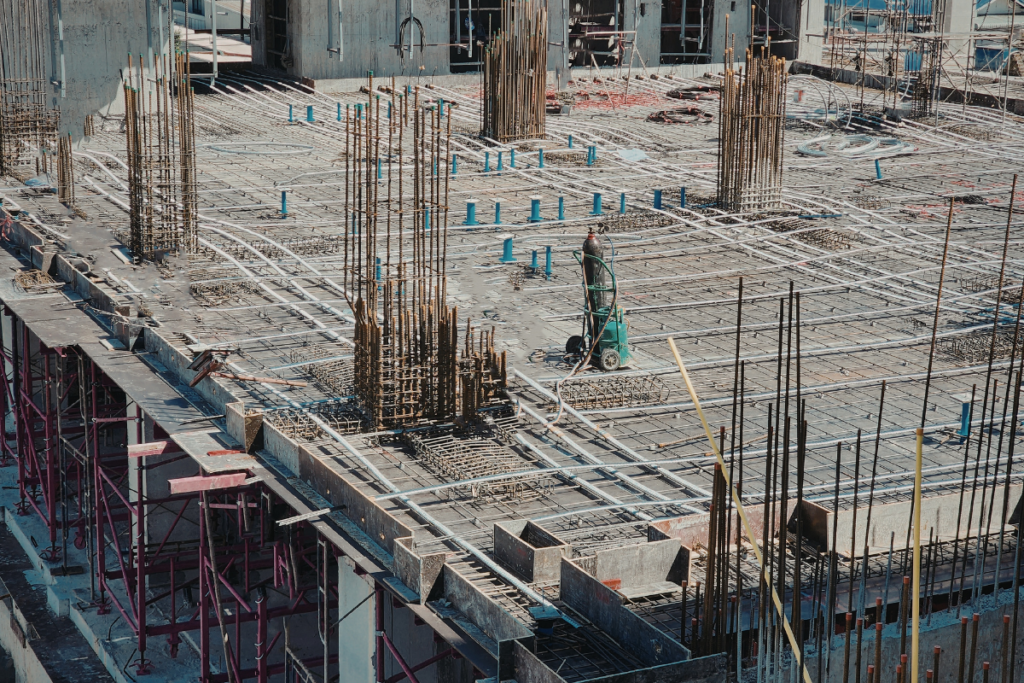
The cost of a commercial seismic retrofit can vary significantly, depending on the structure, its condition, the work required, and accessibility to the affected areas.
In San Francisco, the direct construction cost of a soft-story seismic retrofit is estimated from $60,000 to $130,000 per building, depending on building size and project scope. Simpler soft-story retrofit projects have been reported to cost approximately $20,000 to $25,000 per unit, while complex properties can result in higher retrofit costs.
However, this range is most relevant to qualifying wood-frame soft-story buildings, including mixed-use properties with shops, restaurants, or offices at street level. It should not be treated as a standard quote for every commercial retrofit.
What Factors Affect the Seismic Retrofit Cost?
Several parts of the retrofitting process can influence the overall budget:
- Building size, condition, and structural type: Larger buildings generally require more materials, labor, and engineering work, while older buildings may need additional repairs. Costs can also vary depending on whether the structure is wood-frame, concrete, steel, or unreinforced masonry, as each requires a different strengthening approach.
- Screening and engineering: Some buildings require an initial screening before a retrofit plan can be developed. Under San Francisco’s Screening Program, owners of potentially vulnerable concrete or tilt-up buildings may have to pay screening costs estimated from around $300 to $3,200 per building. A detailed structural evaluation and engineered retrofit design will usually add further costs.
- Seismic strengthening methods: Retrofit construction costs can rise when a building requires more extensive structural improvements, such as foundation strengthening, steel bracing, steel moment frames, shear walls, roof-to-wall connections, or upgrades to older concrete or masonry components.
- Permits and approvals: Depending on the project, owners may need building permits and additional reviews related to electrical, plumbing, mechanical systems, fire safety, or street-space use, increasing the total project costs. San Francisco estimates that permits for a soft-story retrofit may cost approximately 3% to 4.5% of the construction budget.
- Site conditions: Commercial properties with a sloped lot, limited access, occupied commercial units, and the need to protect existing finishes can also make the work more complex.
- Additional upgrades and building features: Historic details, accessibility requirements, utility work, or interior finishes can add to the budget.
- Labor, materials, and project schedule: Local construction demand, material prices, and the length of the project can influence the final quote.
For example, a mixed-use soft-story building with ground-floor storefront openings may require relatively limited structural work, such as steel frames or shear walls, keeping costs closer to the lower end of the range. By contrast, a historic commercial building may involve more extensive upgrades along with preservation-related work, increasing the overall retrofit cost.
Financing and Budgeting Considerations
For qualifying soft-story projects, San Francisco has described a PACE financing option that may cover eligible project expenses, including design, permits, and inspections, with fixed-rate repayment terms of up to 30 years.
The most practical first step is to arrange a structural evaluation and request a detailed scope of work before comparing contractor bids. Property owners should also set aside contingency funds for unexpected conditions and consider the possible cost of business disruption during construction.
How Long Does a Commercial Seismic Retrofit Take?
Generally, a seismic retrofit may take several weeks to a few months to complete. The timeline for a commercial seismic retrofit in San Francisco depends on the building type, structural scope, permit process, and whether the property remains occupied during construction. A relatively focused project, such as anchorage upgrades in a low-rise commercial building, may move faster than a seismic retrofit involving structural reinforcement, new shear walls, or several occupied floors.
As a local reference point, San Francisco has estimated that some soft-story retrofit projects with work focused at the ground level can take about two to four months of construction. Larger commercial projects may take several months or longer, especially when they require in-house permit review, phased construction, historic-building coordination, or additional inspections.
Early planning can help the project team develop a more realistic schedule and reduce avoidable delays.
How to Choose a Seismic Retrofit Contractor in San Francisco
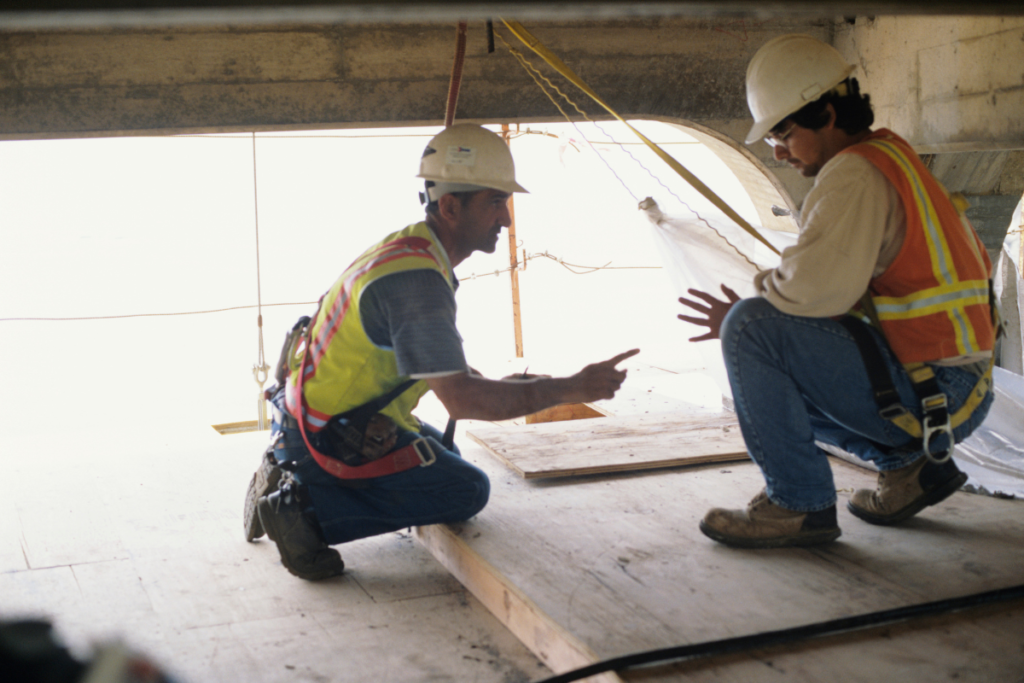
Hiring the right seismic retrofit contractor in San Francisco can have a significant impact on the outcome of your project. Before anything else, confirm that the contractor holds an active California license and review any available complaint disclosures through the Contractors State License Board (CSLB).
Look for Relevant Commercial Experience
Ask the seismic retrofit contractor if they have experience with the type of property you own, whether it is a concrete office building, masonry structure, steel-frame property, tilt-up warehouse, or mixed-use building. Familiarity with performance-based retrofit approaches and existing-building standards such as ASCE 41 can also be valuable on more complex projects.
A qualified seismic retrofit contractor will be comfortable working closely with structural engineers. Retrofit plans may include bracing, anchorage, connection upgrades, or localized reinforcement, and the contractor must be able to follow engineered drawings while communicating clearly with the design team. For older or historic properties, look for experience managing limited access, hidden conditions, preservation considerations, and additional review requirements.
Take client references from recent commercial retrofit projects and review testimonials to understand the contractor’s workmanship, professionalism, and ability to manage risks.
Finally, request a detailed quote outlining the scope of seismic work, materials, timelines, structural recommendations, and contingency for unexpected costs.
Ask These Practical Questions Before Hiring
Before selecting an earthquake retrofit contractor, ask:
- Have you completed similar commercial seismic retrofits in San Francisco?
- How will you coordinate with the structural engineer?
- What assumptions and exclusions are included in the estimate?
- How will you handle unforeseen structural conditions discovered during construction?
- What is your approach to minimizing disruption to tenants and business operations?
- How do you manage inspections, permit requirements, and project documentation?
- Can you provide references from recent commercial retrofit projects?
A reputable contractor should be able to answer these questions clearly and explain their process without relying on vague estimates or assumptions.
Compare Scopes, Not Only Prices
When reviewing bids from seismic retrofit contractors, focus on the scope of work rather than choosing the lowest price. A slightly higher proposal including comprehensive structural improvements, experienced project management, and code-compliant solutions often delivers greater long-term value and lower risks for commercial owners. Compare each scope line by line so you understand what is included, what is excluded, and which costs could appear later.
Case Study: Office Building Seismic Rehabilitation
Project Overview – Located in San Francisco’s Tenderloin neighborhood, this seismic rehabilitation project revitalized a 32,500-square-foot, three-story concrete office building originally constructed in the 1950s. The goal was to modernize the aging structure and improve its seismic performance while preserving its functionality as a commercial property. Following the retrofit, the building was repositioned to accommodate a mix of professional offices, creative workspaces, and ground-floor tenant amenities.
Seismic Retrofit Work – Given San Francisco’s seismic risk, strengthening the building was a top priority. The project team conducted a comprehensive structural assessment and developed a detailed 3D model to evaluate the building’s performance during a major earthquake.
The retrofit strategy included:
- New reinforced concrete shear walls
- Foundation upgrades
- Diaphragm strengthening and
- Targeted structural improvements designed to enhance overall stability
Project Outcome – Working closely with local agencies and stakeholders, the seismic retrofit contractor delivered a resilient, code-compliant facility that extends the building’s lifespan while supporting the evolving needs of modern tenants.
Final Thoughts
Seismic retrofitting is ultimately about making informed decisions before an earthquake puts a building, its occupants, and business operations at risk. For Bay Area commercial property owners, understanding a building’s structural condition can help them better prepare for future seismic events while protecting the long-term value of their investment.
While not every property will require extensive upgrades, a professional seismic evaluation provides valuable insight into potential vulnerabilities and available solutions. By planning ahead and working with qualified seismic retrofit professionals, owners can position their properties for greater stability in one of the nation’s most active seismic regions.
Partner with an Experienced Seismic Retrofit Contractor
If you’re considering a seismic retrofit for a commercial property in the San Francisco Bay Area, partnering with an experienced contractor can make the process more efficient and less disruptive. Constructive Solutions, Inc. works to deliver seismic retrofit projects that strengthen existing structures while supporting long-term operational and investment goals.
Contact our team to discuss your building’s needs and explore practical retrofit solutions tailored to your property.
Frequently Asked Questions (FAQs)
How Do I Know If My Commercial Building Needs a Seismic Retrofit?
Your commercial building may need a seismic retrofit if it is an older structure, has known structural vulnerabilities, or falls under local seismic safety requirements designed to improve earthquake resistance.
Is Retrofitting Buildings Mandatory in San Francisco?
Yes, seismic retrofitting is mandatory for certain building types in San Francisco, including many older soft-story residential buildings, while some commercial and concrete buildings are currently subject to screening programs that could lead to future retrofit requirements.
What Are the Different Seismic Retrofitting Techniques?
Common seismic retrofit techniques include adding steel moment frames, shear walls, foundation anchoring, braced frames, column strengthening, and base isolation systems to improve a building’s ability to withstand earthquakes.
How Often Should a Commercial Building Be Evaluated for Seismic Safety?
Commercial buildings should be evaluated whenever there are major renovations, changes in occupancy, structural concerns, or updates to seismic regulations.
Can a Commercial Building Stay Occupied During a Seismic Retrofit?
Many commercial buildings can remain partially or fully occupied during retrofit work when construction is carefully phased and coordinated around daily operations.
Relevant Resources:
- Seismic Retrofit: Steps to Fix Your Building’s Structural Weaknesses
- 7 Things To Consider Before Seismic Retrofit Project: Top Priority
Constructive Solutions, Inc. is a full-service commercial construction company serving San Francisco and Bay Area.
Whatever your vision, we have the resources, experience, and insight to make your concept a reality, and a space where your business can flourish.
Call Us Now for Estimate








Leave a Reply