

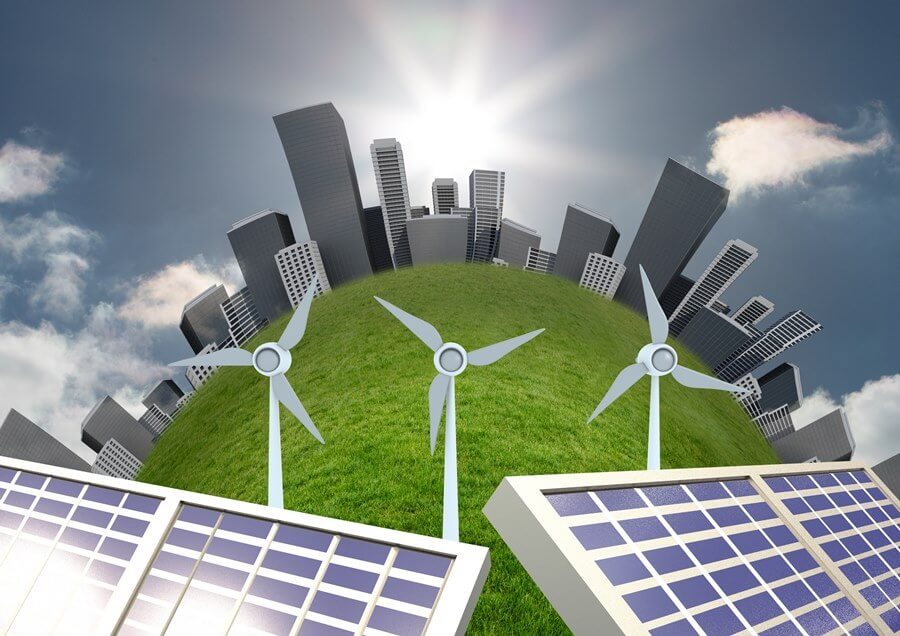
The overall interest in green building technology has increased tremendously in recent years. This is fueled by the increased availability of applications and technologies for building operations. As the years go by, people are getting more aware of the need to carry out construction work with eco-friendly materials and design commercial buildings that are more in tune with the conservation of the ecosystem. There are recent sustainable building trends that have largely affected people’s choice of green construction.
This blog examines the top 10 megatrends that will have the most impact on the future of green building technology.
What is Green Building Technology?
Green building technology, also known as green construction, is the integration of sustainable design, eco-friendly materials, and advanced techniques into a building’s life cycle and reduce its carbon footprint.
From planning, design, and construction to operation, renovation, and demolition, green building technology focuses on implementing resource-efficient and environmentally friendly building practices at every step of a project.
Sustainable construction involves the use of water conservation measures, energy-saving systems, renewable energy sources, waste reduction practices, eco-friendly materials, and smart technologies to minimize the negative impacts of construction projects on the environment.
Importance of Green Building Technology
According to researchers at MIT, commercial buildings account for nearly 20% of all United States CO2 emissions. Moreover, they waste 30% or more of the energy they consume, incurring heavy bills to the property owners. As a commercial business owner, investing in green building technologies will not only save you money but will also uplift your brand’s reputation for being eco-conscious.
Green buildings offer a wide range of environmental and business advantages, such as:
- Reduction of usage and conservation of water, electricity, fossil fuels, and other depleting resources.
- Lower operating costs and long-term cost savings
- Enhances indoor environmental quality
- Improves commercial employees’ health and productivity
- Reduces greenhouse gas emissions and waste generation
- Boosts property values which leads to higher rental rates
- Adherence to green building regulations, certifications, and compliances
- Creates a positive brand image within the industry
Green building technologies can be applied to all scales, whether it’s a single-storey building, neighbourhood of skyscrapers, or entire cities. It’s the perfect remedy to curb the ‘urban heat island’ effect pervading the concrete jungles. Ultimately, the goal of green building design is to conserve non-renewable sources while ensuring the strength and performance of our commercial structures.
10 Megatrends in Green Building Technology
As a rising population and urbanization are increasing real estate carbon footprint, here are the top 10 megatrends shaping the future of green building technology.
1. Water Conservation

General regional droughts and climate change have greatly increased the need for the conservation of water. As a matter of fact, office buildings account for 25% of overall water use, according to EPA’s Energy Star. This is why most commercial construction works now focus on the proper conservation of water and recycling possibilities to keep sewage waste at its least. Shortly, more people will be made aware of an ideal way to change buildings to conserve water effectively. Some of these water conservation methods used in eco-buildings include designing a landscape that will not need watering, making use of appliances with low water pressure rate, and installation of mechanisms that repurposes used water.
2. Energy Efficiency

This has been one of the main focal points for builders because it has a great impact on contractors’ profitability, public concern, as well as on the environment. These days, commercial buildings are being designed in a way to consume less energy by making use of power-saving mechanisms such as solar systems. Investment in the solar system is expected to triple in the next 2 years, and most commercial builders are now incorporating solar into their power-generating grid. Many large corporations are also using renewable sources of energy like wind turbines, geothermal systems, and energy storage systems (ESS) systems to reach their sustainability goals.
3. BIM Technology
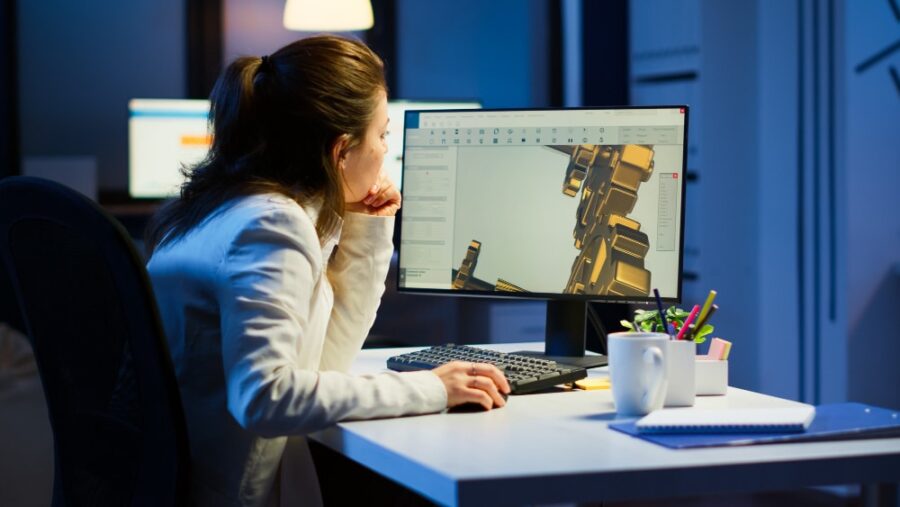
Building Information Modeling (BIM) plans more energy-efficient mechanisms and works with everyone to design the most efficient model possible. With this green building technology, contractors can simulate energy consumption at the construction stage and plan strategies to reduce energy waste beforehand.
The visualization capabilities of Building Information Modeling enable developers to adjust design features according to the performance measurements for energy load, indoor air quality, water use, and so on. After such virtual walkthroughs using BIM software, commercial contractors are better able to devise sustainable alternative solutions.
4. Cloud Computing

Cloud computing has been around for a while now. But business owners can now take advantage of this green building technology to save 40%-80% of energy. Cloud computing is a green building technology that has been employed in several commercial facilities, and its installation is already yielding dividends in terms of the conservation of energy. By leveraging Internet of Things (IoT) technology, commercial properties are bringing sustainability to their day-to-day operations.
Connecting intelligent building management systems (BMS) to smart technologies is emerging as one of the most effective ways for green building management. An automated BMS with IOT sensors and a powerful analytics system can identify patterns, detect errors, perform predictive operations, and offer real-time data to property managers so that they make informed decisions about the building’s energy efficiency. Besides conserving resources, cloud-computing software purifies indoor air, promotes occupants’ health, and saves maintenance expenses.
5. Increased level of competition for green building rating systems

The competition will be fiercer for green building ratings shortly than what is seen presently. DREAM International, Green Globes, and LEED will compete comparatively for rating systems. Already, LEED is seeing heightened competition from Green Globes in terms of new construction ratings.
6. Increased rate of Zero-net-energy buildings

This green building trend is increasingly taking over the building marketplace. Net zero buildings are essentially known to produce ‘zero’ carbon emissions and energy consumption. Zero energy buildings operate independently of the standard power grid and instead use renewable sources of energy like solar power or wind power. Other forms of net zero concepts are ‘energy-plus buildings’ which generate more energy than their requirement and ‘near net zero buildings’, producing a bit less than the required energy.
A survey by NBI (New Building Institute) indicates that this zero net energy trend is likely going to increase tremendously shortly. Governments around the world are offering subsidies to incentivize the construction of net zero structures. California has recently proposed that all new residential and commercial buildings must be designed and constructed to ZNE standards beginning in 2020 and 2030, respectively. Hence, commercial contractors are trying to differentiate their brands by showcasing ZNE designs.
7. Existing buildings taking more spotlights

After the end of the global economic crisis in 2010, the green building industry started switching from accessing new buildings to evaluating existing ones. Retrofitting existing commercial buildings into energy-efficient green structures can be more affordable than constructing new facilities. Also, during renovations and retrofits of historic structures, contractors can add sustainable building features to lower operation costs and environmental impacts.
Builders can employ these practical green construction techniques in an existing structure:
- Integrating automation and energy management systems to monitor HVAC systems
- Water conservation and stormwater management
- Use of natural light and air by repositioning windows
- Applying high-performance insulation material for reducing energy consumption
- Installing cooler flooring tiles like stone, porcelain, ceramic, luxury vinyl, etc.
It is expected that this green construction trend is not going to slow down anytime soon.
8. Disclosure

Following new climate agreements, governments around the world are demanding building performance disclosure. Commercial building owners in numerous metropolitan cities and states are asked to disclose their actual building energy performance to buyers, tenants, and even to the public. The primary aim of this green building trend is to easily monitor the cutback on carbon emissions from government and commercial-owned buildings. This will definitely encourage building owners to invest more in energy-efficient renovations and retrofits.
9. Increased debate on healthy materials

In recent times, there have been increased discussions over the state of building products as it concerns its impact on the environment. Making use of non-toxic, low-emission construction materials is one of the easiest and most practical green building technology to adopt. There are some “red-listed” chemicals and materials of concern that building designers have been asked to avoid during construction. This list will increase, and designers will need to be very selective when choosing which materials have been certified healthy.
Some of the environmentally friendly construction materials you can use for green construction are:
- Natural materials – Bamboo, rattan, cork, clay, grass, wool, stone, and wood.
- Healthy materials – Low VOC plywood, low VOC paints, natural linoleum, Plant-Based Polyurethane Foam Insulation
- Renewable materials – Hempcrete, straw bales, rammed earth, mycelium materials
- High-performance green building materials – Structural Insulated Panels (SIPs), Low-E glass, cellulose insulation
- Recycled materials – Recycled steel, recycled glass, reclaimed wood, polycarbonate sheeting, rubber tyres
10. Circular Economy Model

The green building trend of circular economy can be applied to commercial construction projects through a system of resource utilization that is based on three green building practices – reduction, reuse, and recycling. In the US, the process of construction and operation of buildings makes up approximately 40% of its total landfills. It’s possible to achieve a circular economy model in the construction industry with the following methods:
- Reuse of bricks, concrete, and wood-plastic composites from secondary materials.
- Utilizing by-products, scrap, and other construction waste to manufacture new materials like concrete.
- Following the systemized procedure of waste dismantling, sorting, transferring, and recovering.
- Adopting circular economy strategies in the construction supply chain, for example, contractors buying used components from suppliers.
- Designers planning the adaptability, upgradability, and reusability of building materials as a practice in green building architecture.
Cities like San Francisco, New York, Los Angeles, and Seattle have already announced their plans to become ‘zero waste cities’ before 2050 or sooner. By reducing the demand for steel, aluminum, cement, and plastic, a circular economy can cut down global CO2 emissions by 38%.
Conclusion
The above are the 10 megatrends that are impacting the future of green building technology. But it’s worth mentioning that the most critical of these trends are energy efficiency (solar power), water conservation, and cloud computing. These trends in green building technologies may form the basis for building certification systems and ratings in the future.
Partner with Constructive Solutions, Inc. to create sustainable commercial buildings using green building technologies under reasonable budgets.
FAQs
What is LEED in green building technology?
Leadership in Energy and Environmental Design (LEED) is an internationally-recognized green building certification program developed by the US Green Building Council. LEED includes a set of rating systems designed to benchmark sustainability in buildings.
What are the essential components of a green building?
The US Environmental Protection Agency prescribes seven essential components of a green building:
- Energy Efficiency and Renewable Energy
- Water Efficiency
- Environmentally Preferable Building Materials and Specifications
- Waste Reduction
- Toxics Reduction
- Indoor Air Quality
- Smart Growth and Sustainable Development
Are green buildings more expensive to build than traditional ones?
The costs of green construction mainly depend on the building’s design and the type of systems installed. Research shows that green construction costs are merely 2-3% higher than the construction of non-green buildings. Not just that, sustainable properties save about 14% to 19% in operational expenses.
Relevant Resources:
Constructive Solutions, Inc. is a full-service commercial construction company serving San Francisco and Bay Area.
Whatever your vision, we have the resources, experience, and insight to make your concept a reality, and a space where your business can flourish.
Call Us Now for Estimate


Building owners and homeowners enjoy better energy efficiency and lower maintenance costs. The facts that have been discussed here are really important. Thank you so much for sharing a great post.