

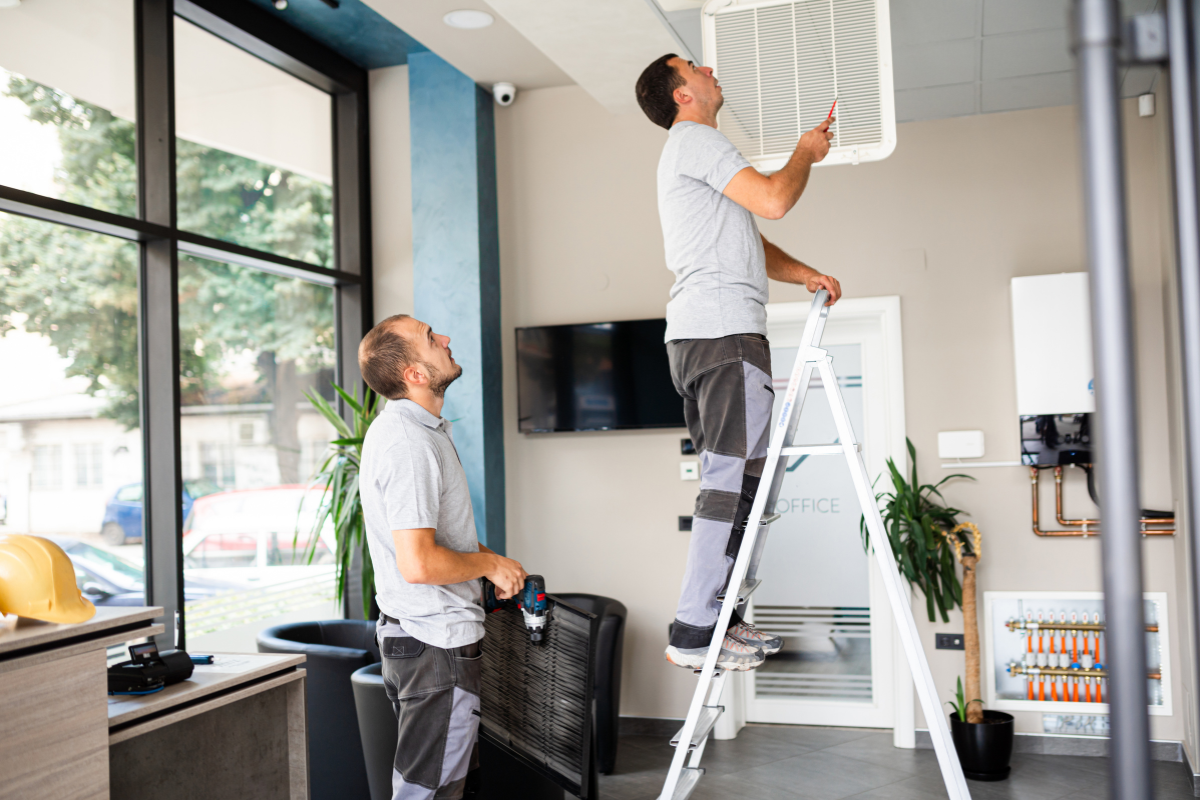
Maintaining a commercial building means preventing minor faults from spiralling into major and expensive repairs. When routine upkeep is skipped and maintenance deferred, repair costs are often 3–10× higher. Unaddressed problems such as a leaking roof or failing HVAC can interrupt business operations and disrupt tenants, leading to lost revenue. To avoid surprises, owners need a structured maintenance program rather than a reactive repair list.
This extensive guide will walk through everything from the basics of commercial property upkeep to detailed maintenance checklists and best practices. So you can protect your asset, keep tenants happy, and prevent costly downtime.
What Is Commercial Property Maintenance?
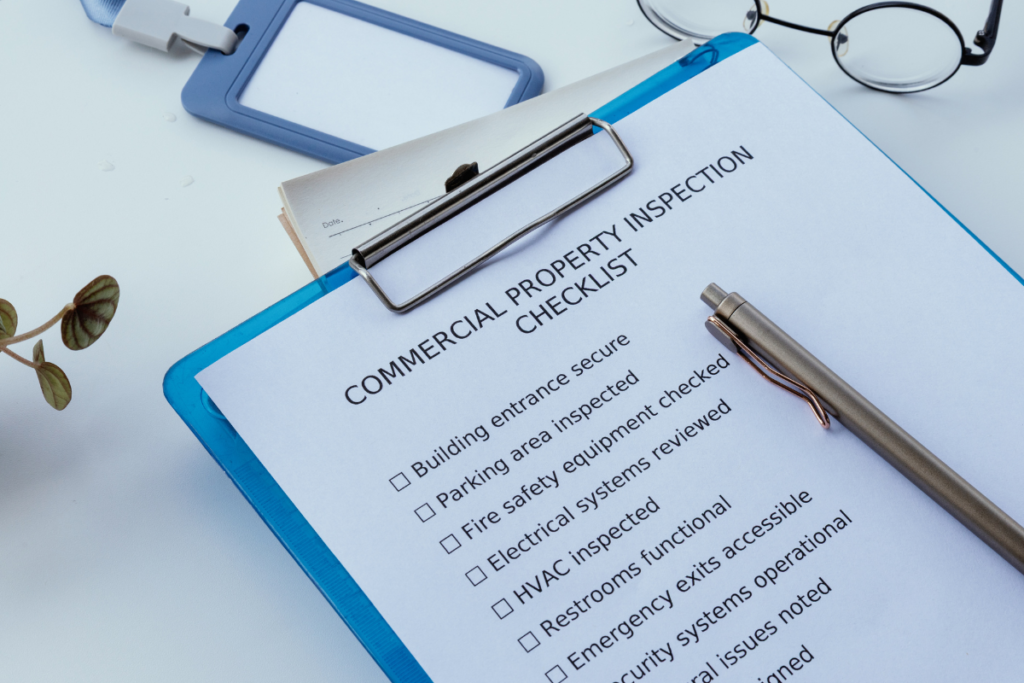
Commercial property maintenance is the ongoing care and servicing of a building’s systems and shared spaces so that the property stays safe, functional and attractive.
It covers everything from routine cleaning and landscaping to maintaining HVAC, plumbing, electrical and life-safety systems. The process is essentially scheduled upkeep, including preventive and reactive tasks, that prevents failures before they become emergencies.
- Commercial Property Maintenance vs. Property Management: Property maintenance is one subset of property management that focuses on the physical upkeep. Property management is the broader role of overseeing a building’s overall operations, finances, leasing and tenant relations.
- Facility Management vs. Facility Maintenance: Facility management is the strategic discipline of coordinating a building’s space, infrastructure, people, processes, and its overall resources. While facility maintenance is one function of facility management, dealing with the actual upkeep tasks.
| Role | Primary Focus |
|---|---|
| Property Management | Tenant relations, leasing, budgeting |
| Facility Management | Strategic operations, building performance |
| Property Maintenance | Repairs, inspections, routine upkeep |
Who Is Responsible for Maintaining a Commercial Property?
That depends on the lease agreement. Often the owner or property management company oversees maintenance, but tenants can share duties via net or gross lease agreements. For example, in a gross lease, the landlord covers most upkeep of the property; in a net lease, tenants may pay for utilities, maintenance, or other operating costs.
Property managers or facility managers on the owner’s payroll typically coordinate maintenance work. Owners often hire outside contractors for specialized trades (HVAC, electrical, plumbing, landscaping).
In all cases, check the lease: gross, modified gross and net leases each spell out who pays for what. Always verify local regulations, as they can override lease terms.
Why Commercial Building Maintenance Is Necessary
Routine maintenance protects your people and your bottom line. Buildings that get regular care are safer, more reliable and cost less to run over time. Consider these benefits:
- Protects occupants and visitors: Well-maintained lighting, walkways and mechanical systems keep people safe. Promptly fixing tripping hazards, replacing burnt-out lights and servicing elevators reduces accidents. For example, well-lit parking areas and clear exits literally save lives.
- Prevents operational disruption: Faulty AC units, plumbing leaks or electrical issues can shut down businesses. Regular servicing catches these problems early, keeping tenants’ businesses running smoothly.
- Extends system life: Routine inspections and servicing mean equipment and structures last longer. Catching a small leak before it rusts a pipe, scheduling HVAC tune-ups and filter changes, or cleaning roof drains before winter delays costly emergencies or replacements.
- Supports tenant satisfaction and retention: Fast repairs and clear communication show tenants their business is valued, which encourages lease renewals. In contrast, a run-down property breeds complaints and vacancies.
- Preserves property value: Consistent upkeep keeps systems reliable, preserves market resale value, and reduces the need for raising insurance claims. Nearly 50% of all commercial building insurance claims involve water intrusion from building envelope failures, a cost avoidable by regular roof and facade care. Well-documented maintenance records also reassure investors and buyers that the asset is cared for.
- Reduces emergency repair costs: Planned maintenance is typically far cheaper than premium “after-hours” repair charges. One study notes emergency repairs can cost 4.8× more than planned ones. Fixing small wear-and-tear issues early means you’re less likely to face an expensive crisis.
- Enhances curb appeal and leasing: A modern, well-lit exterior, landscaping, and signage attract better tenants and customers. Also, a well-maintained property signals professionalism, making leases easier to fill.
- Improves cost predictability: With a general maintenance schedule and budget, owners know what costs to expect. Owners can budget 2–4% of a building’s replacement cost annually for maintenance, rather than paying unpredictable emergency bills.
By focusing on safety, reliability and cost control, a preventive maintenance program for a commercial building pays off in fewer business disruptions and higher returns.
8 Key Commercial Property Maintenance Services
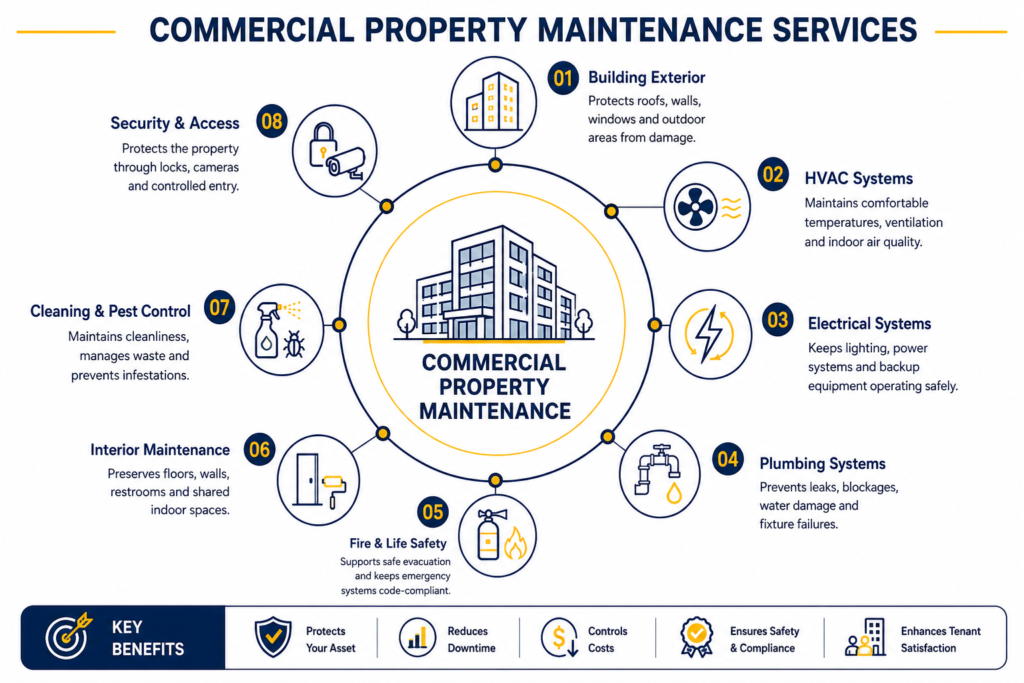
Effective maintenance covers all parts of the building. Commercial property maintenance services typically include:
- Building Exterior and Envelope: Routine care of the outer shell of the building is essential. It includes:
- Roof and drainage: Regular inspections of roofing membranes, clearing drains and downspouts to prevent leaks.
- Facades and finishes: Repairing cracks or damage in brickwork, concrete, stucco or siding to keep weather out.
- Windows, doors and sealants: Checking seals and weather-stripping around doors/windows, and fixing any leaks or broken glass.
- Gutters and stormwater paths: Clearing gutters/trimmed vegetation to ensure rainwater flows away from the foundation.
- Loading areas: Maintaining loading docks, bay doors and canopies so deliveries run safely.
- Parking surfaces: Patching potholes, restriping lots, and fixing sidewalk cracks to maintain safe access.
- Exterior lighting: Ensuring all outdoor lights, including those in the parking lot, signage, and entrance, work properly for security and safety.
- Landscaping and irrigation: Regular trimming of trees, lawn mowing, weeding, irrigation checks and seasonal planting to keep the grounds attractive and safe.
- HVAC and Mechanical Systems: Heating, ventilation and air-conditioning systems in commercial buildings need scheduled care:
- Filters: Replacing air filters to ensure good air quality and system efficiency.
- Heating/cooling equipment: Lubrication and servicing of boilers, chillers, air handlers and ductwork so they run without breakdowns.
- Ventilation: Checking fans and vents for dust or blockages.
- Controls: Calibrating thermostats and control systems.
- Leak/Noise Checks: Monitoring for visible leaks (water or refrigerant), odors in furnaces, or unusual noises that can signal problems.
- Seasonal servicing: For example, pre-summer AC unit checks and pre-winter heating tune-ups. Hiring a qualified commercial HVAC contractor for annual maintenance is helpful.
- Electrical and Lighting: Safe, reliable power is critical for keeping all electrical systems in working order:
- Panels and components: Inspect electrical panels, circuits, and switchgear for faults. Check breakers and wiring for signs of overload or damage.
- Interior lighting: Replace bulbs and ballasts in offices, lobbies and corridors; test switches.
- Exterior lighting: Maintain parking and security lights.
- Emergency lighting: Test exit signs and emergency generators/backup batteries.
- Occupancy controls: Check sensors and timers that control lighting, ensuring they function to save energy.
- Backup power: If there’s a generator or UPS, test and maintain it for power outages.
- Plumbing and Water Systems: Plumbing issues can be costly if unchecked:
- Leaks: Inspect exposed pipes and ceilings for drips or moisture.
- Fixtures: Check pipes, faucets, toilets and drains for damage or clogs; repair or replace as needed.
- Drains: Clean floor drains, cleanouts and grease traps.
- Water heaters: Flush tanks annually to prevent scale build-up, and inspect valves/pressure reliefs.
- Shutoffs: Clearly label and test shut-off valves for the main water line and major equipment.
- Moisture intrusion: Monitor for signs of dampness in walls or ceilings, which could indicate hidden leaks or mold issues.
- Fire and Life-Safety Systems: These are often code-mandated:
- Coordinate regular inspections and testing of alarms, fire extinguishers, sprinklers, smoke detectors and emergency exits with qualified technicians. Keep all documentation current to meet local safety codes. Many jurisdictions require quarterly or annual checks by licensed fire-safety contractors in accordance with the locally adopted NFPA standards.
- Interior and Common-Area Maintenance: Inside the building and shared spaces:
- Walls and ceilings: Patch holes, repaint peeling surfaces, replace damaged tiles or drywall.
- Flooring: Repair or replace worn carpet, tiles, vinyl or wood flooring. Strip and wax hard floors as needed.
- Restrooms: Keep fixtures in working order, grout/seals intact, maintain tiles and ventilation, and supplies stocked.
- Doors and hardware: Oil hinges, adjust closures, fix locks on office and corridor doors.
- Lobbies and corridors: Regular cleaning of floors, glass, seating areas; check and clean stairwells and elevators. Even minor flaws such as scratched floors or peeling paint should be fixed to maintain a professional image.
- Tenant finishes: Touch up tenant-ready finishes between occupancies, and respond to tenant work requests promptly.
- Accessibility features: Ensure ramps, handrails, non-slip surfaces, elevators and signage comply with regulations and function correctly.
- Cleaning, Waste and Pest Control: While janitorial services are ongoing, maintenance coordinates deeper tasks:
- Cleaning: Periodic deep cleaning of carpets, pressure-washing exteriors, window cleaning.
- Waste management: Schedule dumpster emptying and recycling; maintain compactors.
- Pest control: Set up a pest-control program including routine inspections and treatments to prevent infestations (rodents, insects, etc.).
- Security and Access Systems: Good security upkeep protects tenants and property:
- Doors and locks: Regularly service and rekey or repair locks; ensure emergency exits open freely.
- Access control systems: Test key card or fob systems, repair any faulty readers.
- Cameras: Inspect security cameras, alarms, and recording equipment.
- Gates/Barriers: Maintain any gates or parking barriers.
- Visitor systems: Update entry systems and intercoms that screen visitors.
These eight categories cover the main areas of commercial building maintenance, from roofs to restrooms to security systems. By keeping up with all these services regularly, owners can minimize breakdowns and protect their investment.
Commercial Property Maintenance Checklist
Every building’s needs vary based on climate, age, occupancy needs, or local codes, but a sample maintenance schedule often looks like this. Frequencies can be adjusted: for instance, if a manufacturer recommends more frequent checks, do so, and if tenant usage is heavy, add tasks accordingly.
Here’s a baseline checklist for property maintenance:
| Frequency | Interior & Common Areas | Exterior & Grounds | Systems & Safety |
|---|---|---|---|
| Daily | ☐ Clean floors, lobbies and common areas | ☐ Inspect entryways | ☐ Check that interior and exterior lights are working normally |
| ☐ Empty trash and bins | ☐ Clear walkways and parking areas of debris | ☐ Check normal HVAC operation | |
| ☐ Address spills or torn floor mats | ☐ Salt or remove snow and ice as needed | ☐ Inspect pumps, control panels and major equipment for leaks or alarms | |
| ☐ Sanitize restrooms and toilets | ☐ Respond to urgent tenant calls | ||
| ☐ Refill restroom dispensers | |||
| Weekly | ☐ Dust and clean furniture in public areas | ☐ Inspect sidewalks, curbs and parking surfaces | ☐ Test fire alarms and emergency lights |
| ☐ Check lighting in offices, corridors and common areas | ☐ Note cracks, potholes or other damage | ☐ Check exits and exit signs | |
| ☐ Replace burned-out bulbs | ☐ Mow lawns and trim hedges or landscaping | ☐ Confirm electrical panels show normal status | |
| ☐ Check for insects, rodents or other pest signs | ☐ Check irrigation | ||
| ☐ Contact pest control if needed | ☐ Clear leaves and debris from gutters and storm drains | ||
| Monthly | ☐ Inspect ceilings, walls and floors for stains, cracks, leaks or wear | ☐ Check exterior and signage lights | ☐ Replace HVAC filters |
| ☐ Fix minor interior damage | ☐ Clean exterior light housings | ☐ Check thermostat calibration | |
| ☐ Test lighting controls and circuits | ☐ Repair damaged signage | ☐ Service sump pumps, basins and sewer connections | |
| ☐ Replace old bulbs or tubes | ☐ Repaint faded parking lines and markings | ☐ Check drains and grease traps for blockages | |
| ☐ Check toilets, faucets and restroom fixtures for leaks, damage or poor operation | ☐ Inspect window and door seals for weather tightness | ☐ Check generator oil, fuel and other fluids and top off as needed | |
| ☐ Trim trees and shrubs | |||
| Quarterly / Seasonal | ☐ Conduct a thorough safety and compliance walkthrough | ☐ Clean gutters and downspouts, especially in spring and fall | ☐ Tune HVAC systems in spring and fall |
| ☐ Check fire-extinguisher tags | ☐ Check for conditions that could cause roof water damage | ☐ Check HVAC belts, motors and coolant levels | |
| ☐ Confirm exit signage and emergency access are clear | ☐ Inspect roof flashings, drains and membrane after harsh weather | ☐ Inspect boilers and other major equipment | |
| ☐ Test door and window locks | ☐ Repair or reseal windows, doors and exterior caulking | ☐ Inspect plumbing and electrical panels | |
| ☐ Inspect weatherstripping and damaged caulking | ☐ Pressure-wash siding, pavements and entryways as needed | ☐ Review electrical loads | |
| ☐ Check and re-caulk expansion joints | ☐ Check equipment for unusual sounds, odors or other warning signs | ||
| Annual | ☐ Deep-clean carpets and floors | ☐ Inspect all exterior signs and fixtures | ☐ Inspect and service fire extinguishers and suppression systems |
| ☐ Refresh worn or faded paint and sealers | ☐ Repair or replace damaged signs | ☐ Schedule specialist testing of fire alarms and sprinkler systems | |
| ☐ Replace long-life bulbs or ballasts in common areas | ☐ Replace dead plants | ☐ Replace smoke and CO detector batteries | |
| ☐ Schedule pest-control treatment and review its effectiveness | ☐ Prune trees and trim back large branches | ☐ Have licensed technicians flush and inspect boilers and water heaters | |
| ☐ Re-seed damaged lawn areas | ☐ Flush and test water heaters | ||
| ☐ Clean HVAC coils | |||
| ☐ Thoroughly inspect electrical panels | |||
| ☐ Test circuit breakers under load | |||
| ☐ Conduct a full backup-generator test under load | |||
| Records & Planning | ☐ Record completed maintenance tasks | ☐ Keep photos and notes of exterior damage | ☐ Keep service reports and equipment records |
| ☐ Document inspection findings and repairs | ☐ Track outstanding repairs | ☐ Review recurring issues and maintenance patterns | |
| ☐ Update budgets, maintenance plans and future capital needs based on the year’s findings |
Note: This commercial property maintenance checklist is a general guide; always tailor it to your building’s assets.
Keeping records of upkeep tasks and any findings is crucial. As NAI Global emphasizes, well-documented inspections and repairs reveal patterns and improve budgeting and capital planning.
Types of Commercial Building Maintenance Explained
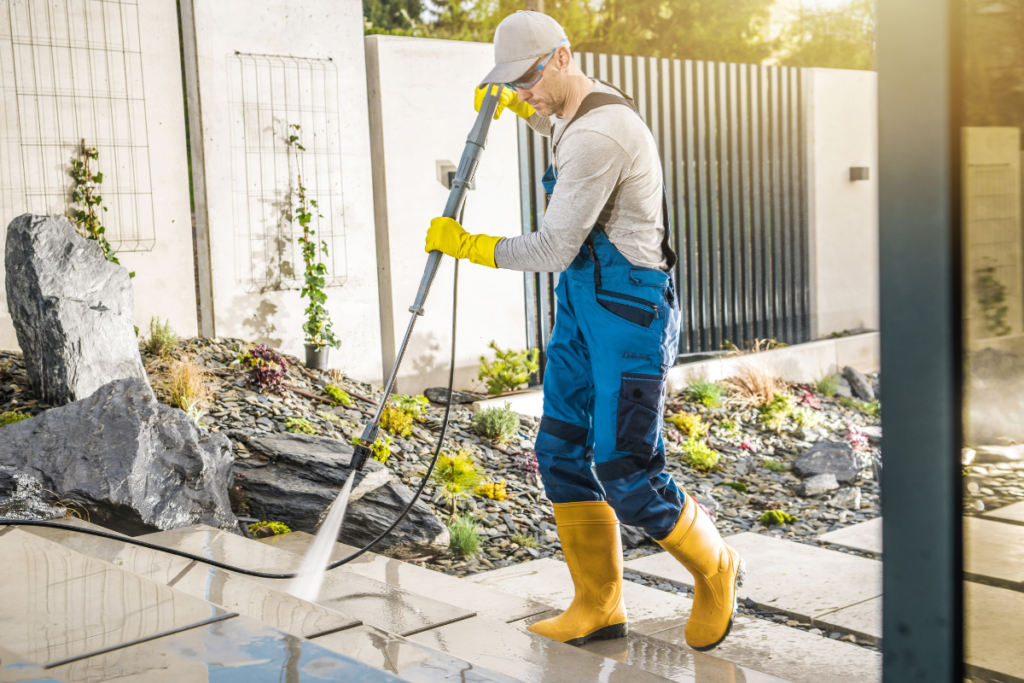
Commercial buildings use several maintenance strategies, such as:
- Routine maintenance: Routine maintenance tasks are day-to-day recurring activities that keep basic systems functioning smoothly. For example, janitorial services, waste removal, and small repairs.
- Preventive maintenance: This includes scheduled inspections and servicing of equipment to prevent failures. For example, monthly generator testing or periodic servicing of elevators or pumps.
- Predictive (or condition-based) maintenance: Predictive maintenance is a data-driven approach that can optimize scheduling. Sensor readings, thermal scans, and vibration analysis trigger work orders only when needed. For example, a smart water meter may detect an unusual increase in overnight water use, indicating a hidden leak before visible damage occurs.
- Corrective maintenance: Repairs scheduled after a problem is identified but before it becomes an emergency. For instance, patching a roof tear or fixing a malfunctioning door lock as soon as it’s discovered.
- Emergency maintenance: Emergency repairs happen outside scheduled times to quickly address immediate safety or operational threats. Examples include repairing a burst pipe flooding an office or fixing a power outage in critical areas.
- Capital replacements (improvements): Capital improvements are overhauls or replacements of building components, and not part of regular maintenance. When a system or component has reached end-of-life or requires upgrading, it becomes a capital project. Unlike minor repairs, capital improvement projects often add significant value to the property (for accounting purposes, they’re booked as capital expenditures).
By using these approaches of maintaining properties, commercial owners can keep businesses running without resorting solely to emergencies.
How Much Does Commercial Property Maintenance Cost?
Maintenance budgets vary widely by building size, age, location and use. As a rough guide in the US market, owners often spend $1–$3 per square foot per year on maintenance and repairs. For a 100,000 sq.ft office, that’s roughly $100,000–$300,000 annually.
High-end commercial properties or ones with 24/7 operation can be $4–$5 per square foot or more. For example, it was found that U.S. office maintenance averages $1.60–$2.80 per ft² depending on building condition and services included.
Common line-item costs for maintaining a commercial building include:
- Routine cleaning: Approximately $0.10–$0.30 per sq.ft (covering daily janitorial services).
- Landscaping: Often $200–$500 per month for groundskeeping tasks.
- HVAC servicing: Nearly $150–$400 annually per unit.
- Electrical callouts: Approximately $100–$500 per service call.
- Plumbing repairs: Typically can range from $150 for a minor fix-up to $1,500 for a big job like a hot water heater replacement.
Of course, older buildings or spaces with tech or high-end finishes can push costs higher. Commercial structures in harsh climates often need more frequent servicing of systems, roof inspections, and exterior upkeep.
How to Budget Commercial Maintenance and Cost Control
A common budgeting rule is to allocate 2–4% of a building’s replacement value to maintenance each year. To refine budgets, some owners use Facility Condition Assessments, costing a few cents per square foot, which detail expected repair timelines. A growing trend is using CMMS software to track costs and shift more to preventative maintenance, which can cost 25–30% less than reactive maintenance, cut operating expenses by 12–18%, and deliver an ROI of approximately 400%.
In any case, planning for maintenance can reduce unplanned spikes by catching issues early, giving the best control over emergency-price premiums.
Commercial Building Maintenance Tips for Owners
Maintaining a commercial property well requires planning and discipline. Here are best practices for success:
- Conduct Routine Inspections: Schedule routine walk-throughs of all systems using a checklist to identify minor issues early. Preventive tasks like cleaning roof drains or testing fire alarms eliminate problems before they become emergencies.
- Budget Wisely: Allocate funds for regular upkeep costs and keep a reserve for unexpected repairs. Budgeting for maintenance, including minor fixes and major projects, prevents financial surprises.
- Prioritize Safety: Make tenant and visitor safety top priority. Ensure egress routes, stairwells and parking areas are well-lit and free of hazards. Stay on top of code requirements (fire, accessibility, electrical, etc.). Regularly test and maintain safety equipment.
- Outsource Maintenance Services: For specialized tasks, hire experienced commercial contractors or facility managers. They can handle everything from routine repairs to whole-facility maintenance programs. Verify any vendor’s commercial experience, licensing and insurance first.
- Use Technology and Keep Records: Demand transparent reporting of maintenance work in logs or modern CMMS (Computerized Maintenance Management System) software. For instance, a cloud-based system lets tenants submit requests online and lets you track completion digitally. Document inspections, repairs and equipment history, which can help reveal patterns and improve budget planning.
- Stay Responsive to Tenants: Encourage tenants to report issues quickly via an easy maintenance portal or app. By being responsive, you keep tenants happy and prevent bigger damage later.
By following these tips, you can minimize downtime and maximize the life of your property.
Maintenance Requirements by Commercial Property Type
Each commercial property has its own maintenance needs based on its use, systems, traffic levels, safety requirements and operational demands.
| Property Type | Additional Maintenance Priorities |
|---|---|
| Offices | Occupant comfort, elevators, common areas, UPS systems and data-room cooling |
| Retail | High-traffic cleaning, storefronts, signage, parking areas and customer-facing spaces |
| Industrial | Flat roofs, loading docks, heavy-use floors, ventilation and fire controls |
| Healthcare | Infection control, air filtration, water quality, sanitation and backup power |
| Mixed-Use | HVAC zoning, access control, different operating hours and tenant coordination |
Each property type has unique wear patterns and tenant expectations, so create the maintenance plan accordingly.
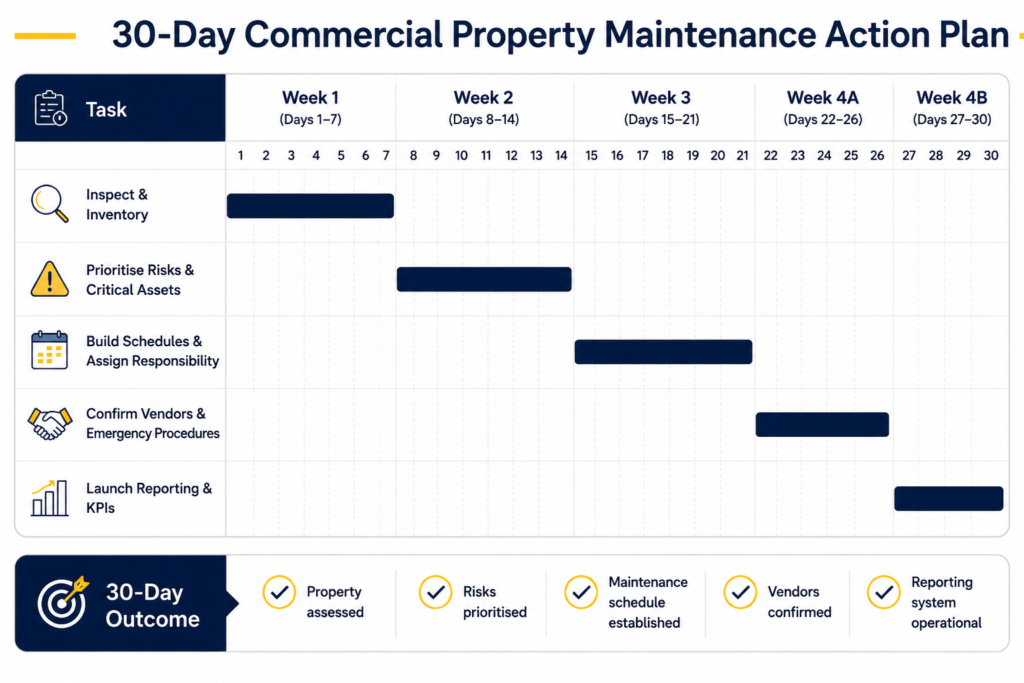
A 30-Day Commercial Maintenance Action Plan
For a new or recently acquired property, start with a focused 30-day action plan:
Days 1–7: Inspect and inventory.
Walk the site thoroughly. Document the current condition of major systems, roofs, safety equipment and finishes. Inventory assets and note any obvious defects or code issues. Use checklists to ensure nothing is overlooked.
Days 8–14: Prioritize risks and critical assets.
Review your findings and prioritize risks. Identify high-urgency issues like safety hazards or failure-prone equipment and critical assets with limited life, such as an old roof or aging boiler. Assign priorities: e.g. “Fix roof leak within a week” or “inspect backup generator before winter.”
Days 15–21: Build schedules and assign responsibility.
Develop a maintenance schedule for routine tasks based on manufacturer recommendations and occupancy. Assign tasks to in-house staff or outside contractors into daily, weekly, monthly, or seasonal slots. Clearly define landlord vs tenant obligations and document everything in a plan.
Days 22–26: Confirm vendors and emergency procedures.
Reach out to trusted vendors/ contractors for quotes or availability on priority jobs. If you need third-party vendors (e.g., plumbers, electricians, locksmiths), secure contracts or service agreements and verify their licence and insurance. Review warranty or service plans for key equipment. Also, establish 24/7 emergency response protocols: list emergency contacts, establish after-hours call-out procedures, and ensure everyone knows them.
Days 27–30: Launch reporting and KPIs.
Set up your maintenance tracking system. Set up simple logs or a CMMS system to record work orders, costs and outcomes. Begin recording completed work and open issues. Define key performance indicators such as response time, work order backlog, maintenance cost per square foot vs. budget to measure program effectiveness. Schedule a review after one month to adjust priorities and fill any gaps.
This 30-day maintenance plan gets you organized: you’ll know the building’s condition, have priorities set, schedules created, and vendors ready, all of which prevent chaos down the line.
Questions to Ask a Commercial Property Maintenance Company
- Have you maintained commercial properties similar to ours?
- Are your technicians licensed, insured and trained in commercial building codes?
- Do you offer 24/7 emergency support, and what is your typical response time?
- Do you provide detailed work orders, inspection reports or digital logs?
- How do you spot and handle recurring maintenance problems?
- What is your escalation process for unresolved problems?
- Can you provide commercial references and itemized pricing?
Compare itemized proposals based on service quality, communication, accountability, and long-term value rather than choosing the lowest bid. Evaluate hourly vs flat-rate and consider contract terms.
If the property may require large repairs, renovations, or future capital improvement projects, consider whether the maintenance provider can coordinate with or operate as a full-service commercial general contractor.
When Maintenance Becomes a Repair, Replacement, or Capital Improvement
Signs Routine Maintenance Isn’t Enough
If you find the same problem recurring frequently, say, a boiler that requires weekly patch-ups, that’s a red flag. Other signs include spiralling repair costs, systems constantly failing or equipment being near the end of its useful life. These indicate that stopgap fixes no longer suffice and a capital improvement is needed.
Repair, Replace, or Renovate?
To decide whether to repair, replace, or renovate, compare the cost and benefits.
A general rule of thumb: if the cost of upcoming repairs approaches 40–50% of replacing the equipment or system, replacement is likely more cost-effective.
Also consider safety and efficiency: a decades-old air handler that constantly breaks down may justify a new energy-efficient model. On the other hand, if only one small part is worn, a repair might do.
Incorporating Findings into Capital Planning
Track maintenance data to inform your budget. For example,
- If quarterly inspections of a 20-year-old commercial roof reveal growing leaks and patching costs keep rising, schedule a full roof replacement in your next CapEx budget.
- Or if multiple tenants mention access-control failures, plan a system upgrade with better reliability.
Essentially, use maintenance logs and inspections to guide long-term spending.
That new installation is a capital improvement (depreciable asset) rather than a routine maintenance expense.
When to Hire a Commercial General Contractor
This transition from reactive fixes to planned capital improvement is where a commercial general contractor can step in. They can survey conditions, propose renovation or replacement projects, and execute upgrades that build resilience into your asset and increase its resale value.
Frequently Asked Questions (FAQs)
What Are the Different Types of Maintenance?
The main types of maintenance are routine, preventive, predictive (condition-based), corrective, emergency, and capital replacement or improvement maintenance.
What Are the Key Functions of Maintenance?
The five basic functions of maintenance are inspection, servicing, repair, replacement, and preventive maintenance to ensure assets remain safe, reliable, and operational.
What Is Included in a Maintenance Checklist?
A maintenance checklist typically includes inspections, cleaning, repairs, HVAC, plumbing, electrical, fire safety, exterior upkeep, security systems, and documentation of completed work.
What Is the Difference Between Commercial and Residential Maintenance?
Commercial maintenance covers larger business properties with complex systems, stricter regulations, and frequent servicing. Residential maintenance focuses on routine repairs, safety, comfort, and the upkeep of homes.
Conclusion
Recurring building problems often indicate that basic repairs may solve an immediate issue, but they can also delay a larger and more expensive failure. The best solution is a thorough commercial property assessment with which owners can identify current maintenance needs and rank them by priority.
This clarity also lets you strategize future capital improvements. Proactive commercial maintenance is vital to reduce unexpected costs, limit operational disruption, protect tenant satisfaction, and preserve long-term asset value. Planning ahead allows owners to make informed decisions instead of reacting to costly surprises.
Schedule a Commercial Property Walkthrough
Get an expert evaluation of your building’s condition from Constructive Solutions, Inc. Our walk-through will highlight urgent repairs and help formulate a proactive maintenance plan.
We can help determine when it’s time to repair, replace or remodel components of your building, ensuring you get the best return from your investment. Contact us to discuss a Repair or Capital Improvement Project.
Relevant Resources:
- San Francisco Seismic Retrofit Guide for Commercial Buildings
- A Guide to ADA Bathroom Requirements for Commercial Buildings
Constructive Solutions, Inc. is a full-service commercial construction company serving San Francisco and Bay Area.
Whatever your vision, we have the resources, experience, and insight to make your concept a reality, and a space where your business can flourish.
Call Us Now for Estimate




Leave a Reply